Some of your customers are being paid for by the others
Segmentation is not a persona doc. It is where your finite money goes. Why every owner agrees with that and almost none of them act on it.
TL;DR
Ask most owners who their customer is and you get a version of the same answer. Anyone who needs what we do. It is said with some pride, and it should be, because it usually means the business survived by being useful to whoever walked through the door.
It is also the absence of a strategy, described generously. And nobody chose it. It arrived one reasonable yes at a time, which is exactly why it is so hard to undo. There was never a meeting where you decided to serve the low margin, high maintenance segment. So there is no meeting where you can stop.
Segmentation is not a document. It is the decision about where finite money goes. Almost every owner agrees with that, and almost none of them act on it, for a reason that has nothing to do with discipline.
Read next: Grand Union, where the money moved to what the market actually wanted · Peak Value, where more leads was the wrong goal · The referral you can't repeat
One page, three lines
On 25 September, ten Portland owners spend four hours in a room and leave with a single sheet of paper.
Three lines on it. Back one customer. Cut one customer. Defend both, out loud, in one sentence, to people who can push back.
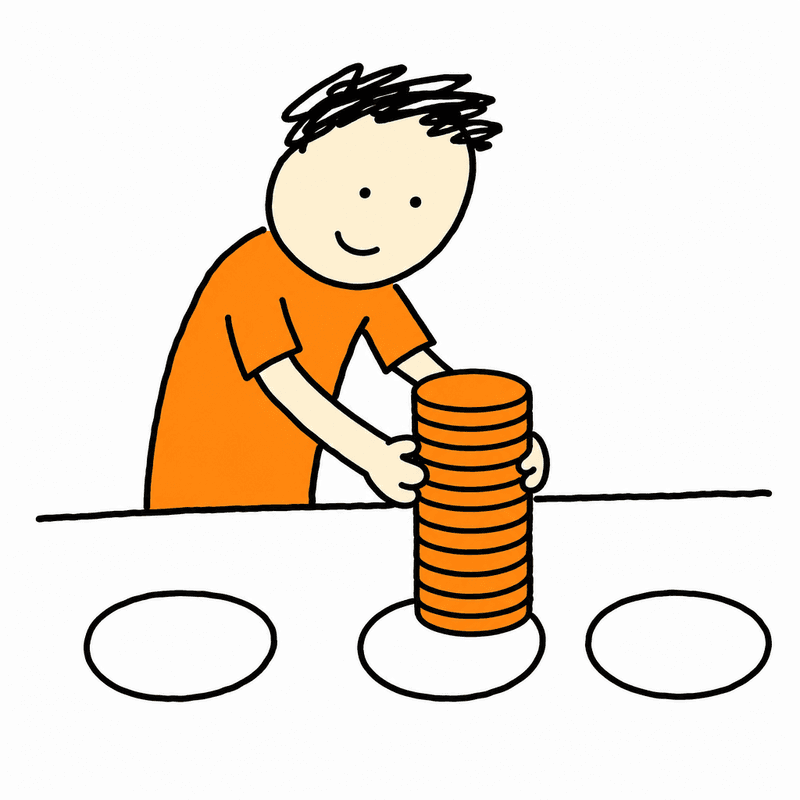
That is the entire output. Not a strategy document, not fifteen things to implement. Three lines, and they are much harder than they look, because the second one costs something and the third one means you have to believe it in front of witnesses.
Nobody decides to serve everyone
No owner stands at a whiteboard and says the plan is to be moderately relevant to the entire market.
It happens differently. A good opportunity comes along and yes, we can accommodate that. A customer needs a small exception and fine, we will make it work. Sales wants to chase an account in an adjacent space, and why not. Marketing spreads the budget across everything, because everything is worth something.
Every one of those is defensible on its own. Added together over five or fifteen years, they produce a business whose strategy is a collection of previous yeses.
What was never decided cannot be undecided
This is the part that traps people, and it is structural rather than personal.
A decision you made can be revisited. You can call the meeting, look at what changed, and choose again. But there was never a meeting where the low margin segment got approved. It accumulated. Nobody owns it, nobody signed it, and there is no document to amend.
So it sits there, quietly taking the sales time and the custom work and the operational patience, and every attempt to address it feels like an argument about nothing in particular.
Revenue tells you what a customer pays
It does not tell you what they cost.
A customer can generate real revenue and still consume disproportionate sales attention, custom work, service load and complexity. That does not make them a bad customer. It means revenue alone cannot tell you whether they deserve the next dollar.
Four questions get at the rest of it. What did it take to win them. What does it take to keep them. What has the business bent or built specifically for them. And what else could have received that same time and money.
The last one is the cost nobody sees, because it never arrives as an invoice. It arrives as the thing that did not get funded.
Knowing this has never been enough
Here is the uncomfortable part, and it is the reason the 25th is a simulation rather than a talk.
You can read everything above, agree with all of it, and change nothing about how the business runs on Monday. Most people do. That is not a failure of intelligence.
It is the feedback loop. Reallocate your sales effort in January and you find out whether you were right some time the following year, by which point six other things have changed and nobody can say what caused what. The lesson arrives too late and too mixed up to teach anything.
So you go back to spreading the money around. Spreading the money around never produces an obvious failure. It produces a slow, invisible one.
Which is why you compress it
Four hours. Five teams of two, five competing businesses, one market, the same information and the same constraints.
You allocate. Product, price, sales coverage, marketing, production. Nothing is unlimited, so every choice comes out of something else. Then the market moves and the results come back, and you find out what you actually believe about customers when four other people are bidding for the same ones and the budget runs out.
The simulation is SABRE. Wharton's Executive MBA students all take it, and have ranked it the number one course in the program. Taka Yokoyama, who has co-taught that Wharton course with Professor David Reibstein since 2021, lives in Portland, which is the only reason this session exists at all.
Nobody in the room will be told who their best customers are. That is the whole method. What is on offer is a way of deciding, a competitive environment to practise it in, and four hours where the only thing you have to do is choose.
The details
The Customer Bet, a Strategy Lab session run by IIBD. Friday 25 September, 1 to 5pm, NedSpace, Portland. Ten owners, five teams, free, and invitation only. Details and registration at strategylab.iibd.com.
Amoebaworks is sponsoring it and did the positioning, the messaging and the site. We took it on because it is the same argument we make for a living. Most of the businesses we are called into do not have a marketing problem. They have an allocation problem that nobody ever decided on, and it shows up downstream as marketing that feels like guessing.
Friday is the simulation. Monday is the bet.
Who are you betting your business on? Not who buys from you, and not who spends the most. Who is worth more of your finite money and attention than everyone else, and are you willing to say that out loud.